What are the Top Automated Cloud Agent Workflows for Platform Engineering Teams
Platform Engineering paves the road for product teams by removing friction, standardizing best practices, and reducing the cognitive load of everything that isn’t writing feature code.
But platform teams are often drowning in alert fatigue and manual triage. The solution isn’t more dashboards. It’s Continuous AI.
By connecting your existing toolchain (GitHub, Sentry, Snyk, Supabase, PostHog, Slack, Netlify, etc.) to Continue Mission Control, you can deploy AI Agents that turn noisy signals into finished work.
ADDITIONAL CLOUD AGENT RESOURCES
- Examples of cloud agent workflows you should consider
- More cloud agent workflow types in the taxonomy
What we mean by cloud agents
Cloud agents are AI agents that run continuously in the cloud, connected directly to your development and production systems. Unlike local or IDE-only AI agents, our cloud agents respond to real events, alerts, pull requests, deployments and take action automatically or can be enabled manually.
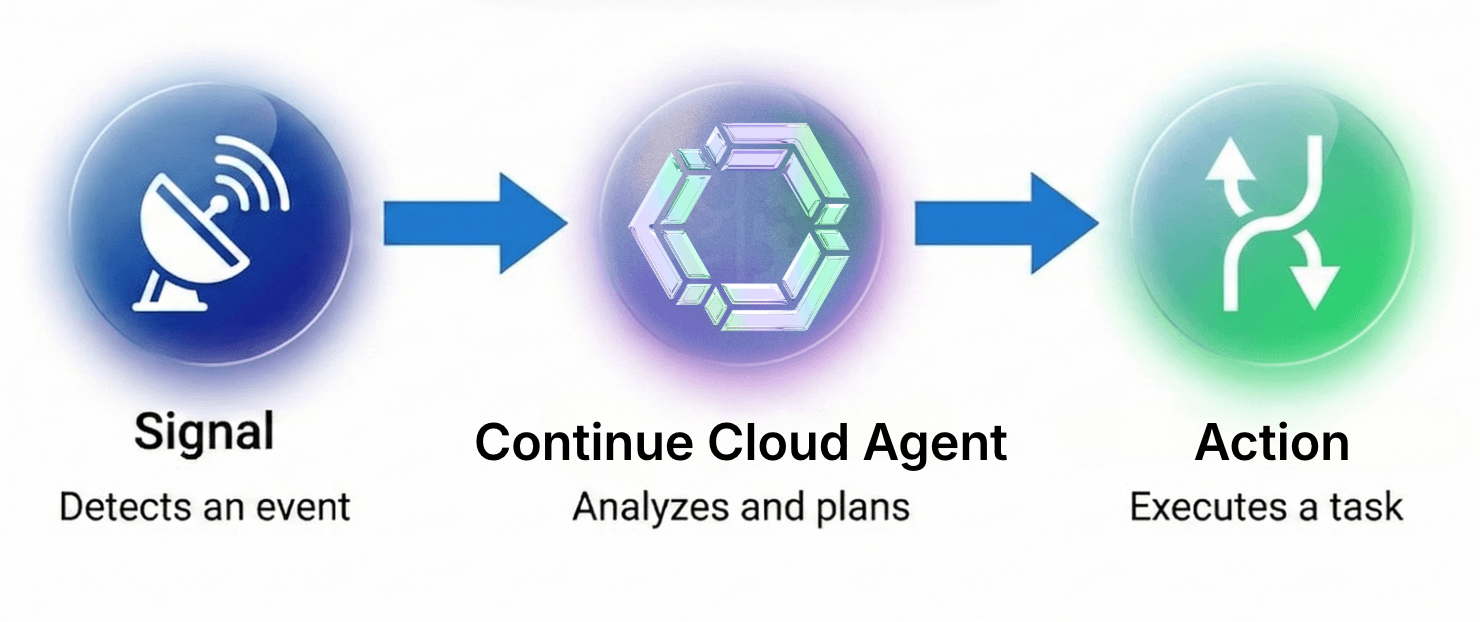
Here are the top automated workflows platform engineering teams should implement to reduce friction, improve reliability, and scale with AI Agents.
What are Cloud Agent Workflows? Cloud Agent Workflows are automated, background processes that trigger AI agents to resolve engineering tasks without human initiation. Unlike standard CI/CD pipelines, they use LLMs to reason about code, allowing them to triage alerts, fix security vulnerabilities, and audit database permissions autonomously.
The Top 7 Cloud Agent Workflows Platform Teams Should Implement
1. Auto-Fix Security Vulnerabilities with Cloud Agents (Snyk)
Trigger: New High/Critical vulnerability detected Agent Action: Analyze, patch, and open a PR
Security scanning is essential, but it often ends up creating more tickets. By integrating Snyk with Continue, platform teams move from detecting issues to fixing them automatically.
When Snyk detects a vulnerability, a security agent analyzes the dependency tree and generates a pull request with the required upgrade or patch.
🔗 Docs: Snyk + Continue Integration 🔗 Add the Integration → 🔗 Guide to Automated Security Remediation with Snyk →
Why it matters: Reduces MTTR dramatically and keeps security debt from piling up.
2. Production First-Responder: Automated Error Resolution (Sentry)
Trigger: New Sentry issue Agent Action: Root cause analysis + fix PR
The first 30 minutes of an incident are usually spent context-switching. Your team can save time by deploying cloud agents that use AI to triage Sentry issues. When the Sentry Integration is enabled and your Sentry projects are mapped to repos, new actionable alerts can trigger triage and PR generation.
Agents ingest Sentry stack traces, correlate them with recent commits, locate the relevant code, and generate a fix.
🔗 Docs: Sentry Integration 🔗 Add the Integration →
Why it matters: Acts like an always-on L1 support engineer that never gets tired.
3. Database Security Guardrails with AI (Supabase RLS)
Trigger: PR opened Agent Action: Audit Row Level Security policies
Database security is notoriously hard to review manually. This workflow ensures every schema or query change is checked before merge.
The Supabase agent audits RLS policies and can generate migrations when leaks are detected.
🔗 Docs: Supabase Integration 🔗 Add the Integration →
Why it matters: Catches permission leaks at review time before production exposure.
4. Context-Aware ChatOps with Slack + Cloud Agents
Trigger: Mentioning @Continue in a Slack thread Agent Action: Full context resolution + PR creation
Unlike traditional ChatOps bots, Continue’s Slack integration understands conversation context.
When you tag @Continue, the agent uses the entire thread as context, clones the repo, makes changes, and opens a PR directly from Slack.
🔗 Docs: Slack Agent Integration 🔗 Blogs: Bug Reports Should Fix Themselves: Dogfooding Our Slack Cloud Agent with GitHub and Linear | Turn Slack Conversations into GitHub PRs Automatically 🔗 Add the Integration →
Why it matters: Eliminates context switching between Slack, issues, and the IDE.
5. Automated Housekeeping: Docs, Changelogs, and Tests
Trigger: Merge or scheduled workflow Agent Action: Update docs, changelogs, and test coverage
Platform engineers shouldn’t have to chase updates. Agents can handle the first draft to keep the momentum going.
Examples:
- Draft changelog updates from merged PRs
- Keep AGENTS.md in sync with deployed agents
- Identify and generate missing tests
🔗 Docs: GitHub Integration 🔗 Blog: How Continue Cloud Agents Increase Developer Productivity 🔗 Add the Integration →
6. Performance Gatekeeping with AI (Netlify / Lighthouse)
Trigger: PR merged or deploy preview Agent Action: Performance audit + regression detection
Specialized agents can monitor Core Web Vitals and compare preview builds against production.
🔗 Docs: Netlify Integration 🔗 Add the Integration →
Why it matters: Performance becomes a guardrail, not an afterthought.
7. Translating Code into Business Impact (Jira + PostHog)
Trigger: PR merged Agent Action: Update tickets and dashboards
This workflow closes the loop between engineering and product.
- Jira: Agents translate technical PRs into business-readable updates
- PostHog: Agents analyze user behavior and update dashboards or create follow-up tasks
🔗 Docs: PostHog Integration & Atlassian Integration 🔗 Add the Atlassian Integration → 🔗 Add the PostHog Integration →
The Big Takeaway
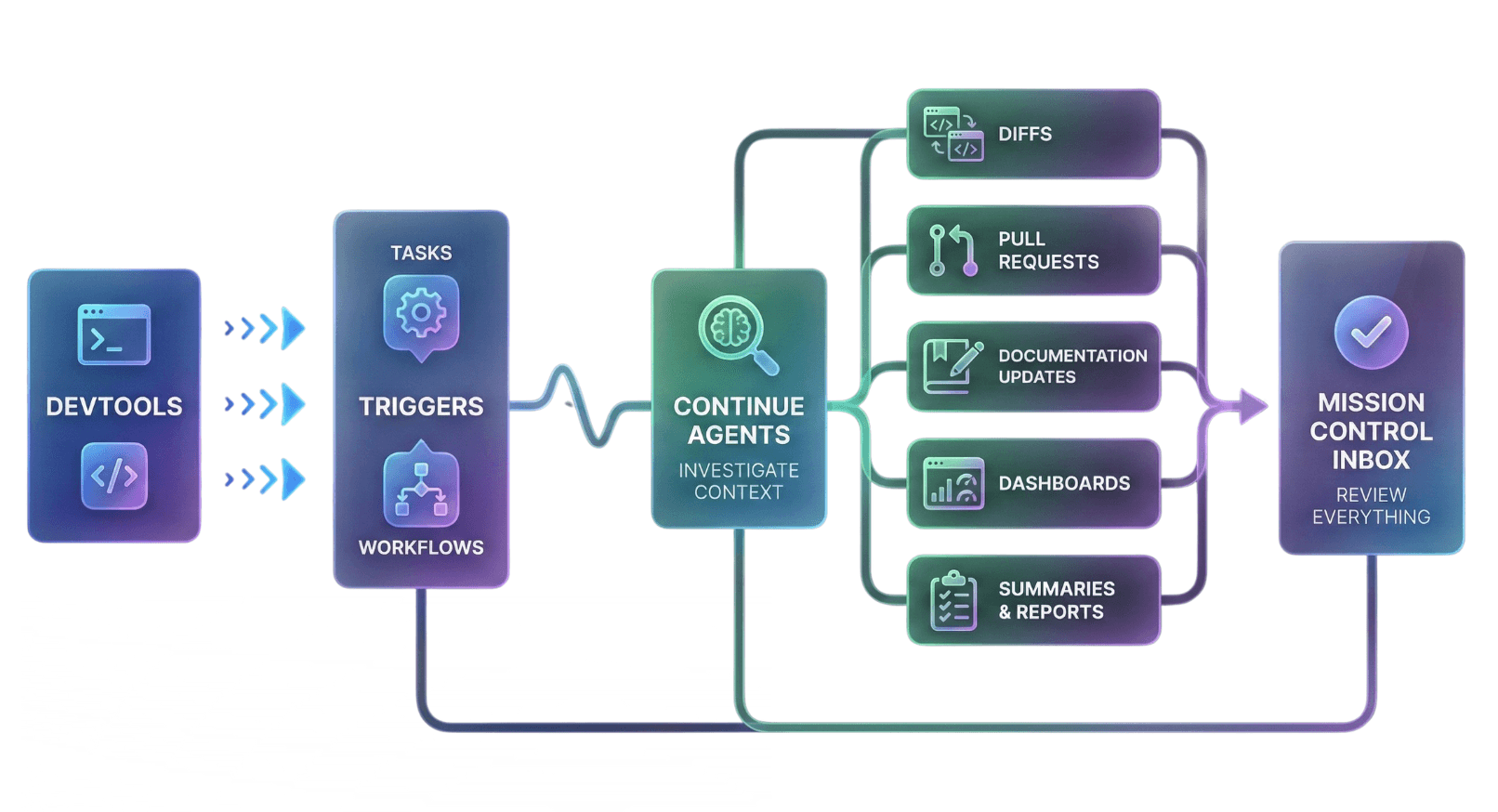
Platform teams shouldn’t be writing more glue code. They should be designing systems where AI agents handle the "busy work" by default. That’s what Continuous AI enables, and Mission Control is where those workflows live.