Hands-Free ≠ Human-Free: What “Hands-Free Building” Gets Right About Context and Cloud Agents
Recently, Byron Rode published a post titled “Hands-Free Building” describing how his development workflow has changed when working with AI agents. It captures a shift in engineering workflows because agent work no longer loses its place when humans step away.
That idea is important. The future Byron describes doesn’t require agents with long-term memory or magical persistence. It requires something more practical and safer.
It requires durable, reconstructable context.
The real bottleneck was never typing
Most software teams don’t move slowly because engineers type slowly. They move slowly because context decays.
Every pause in work introduces friction.
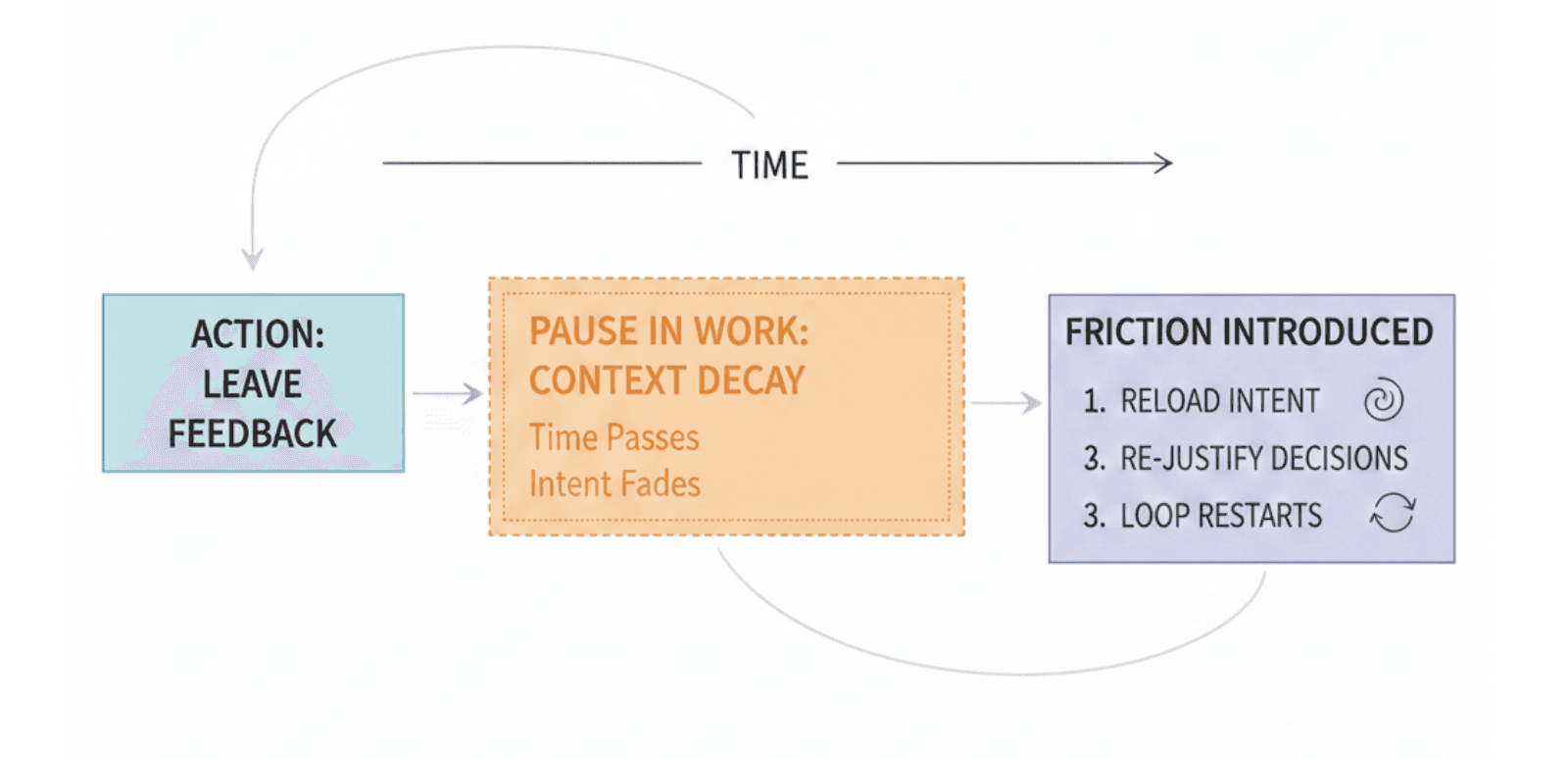
Byron’s post highlights a workflow where this decay is dramatically reduced. When work pauses, the state of intent doesn’t vanish. When it resumes, the system doesn’t ask the human to start from scratch.
This isn’t “vibe coding”
A critical clarification in Byron’s post is that “hands-free” does not mean “hands-off.”
The human still:
- Designs the system
- Makes architectural decisions
- Defines constraints
- Reviews output
- Owns the result
What changes is how intent is captured and replayed.
Instead of living only in an IDE session or someone’s head, intent becomes externalized through notes, feedback, issues, or recorded explanations and then executed asynchronously. Judgment stays human. Execution becomes delegable.
Why this maps directly to Cloud Agents
This is where Byron’s experience connects to the broader shift toward cloud agents.
Cloud agents aren’t just “AI that runs in the background.” They’re designed to:
- Operate asynchronously
- Be invoked repeatedly
- Act on explicit inputs
- Produce reviewable outputs
- Resume work without relying on hidden state
They don’t carry memory forward. They rehydrate context from the environment they’re given. That environment — code, issues, rules, history — becomes the backbone of the workflow.
Context is Becoming Infrastructure
As execution gets cheaper, the scarce resources shift.
What matters more is:
- How clearly work is framed
- Where intent lives
- Whether context is inspectable
- Who owns decisions
In other words, context becomes infrastructure that's durable, versioned, and reviewable. (I've written more about context and cloud agents here.)
How Cloud Agent Context differs from copilots and CI/CD
Not all AI development tools solve the same problem.
IDE copilots
- Good at: Fast, local suggestions
- Limitation: No continuity across sessions
CI/CD Pipelines
- Good at: Reliable automation
- Limitation: Rigid, pre-defined flows
Cloud agents
- Good at: Async, context-rehydrated execution
- Limitation: Requires explicit intent + review
Cloud agents operate in the messy middle where work evolves, pauses, resumes, and needs human judgment. That’s the space Byron’s workflow lives in.
Security doesn’t disappear — it becomes inspectable
Automation always raises security concerns. That’s appropriate. But a context-first, stateless-agent model actually improves safety:
- Inputs are explicit
- Outputs are reviewable
- Decisions are auditable
- Agents don’t accumulate hidden behavior
You can layer reviews:
- Cloud Agent proposes
- Other agents review
- Humans approve
Ownership remains human. Trust is earned, not assumed.
Productivity Gains with Cloud Agent Continuity
The biggest gain teams report from these cloud agent workflows isn’t raw speed. It’s that work no longer stalls when humans step away.
Engineers can:
- Start multiple threads of work
- Pause without losing momentum
- Resume without reloading everything
- Avoid the constant tax of context switching
That continuity compounds and it respects the reality of human lives.
Byron’s “Hands-Free Building” isn’t a call to remove engineers from software development. It’s a window into what happens when context stops evaporating.
Cloud agents make that possible not because they remember, but because they don’t need to.